




Unwanted Tattoos
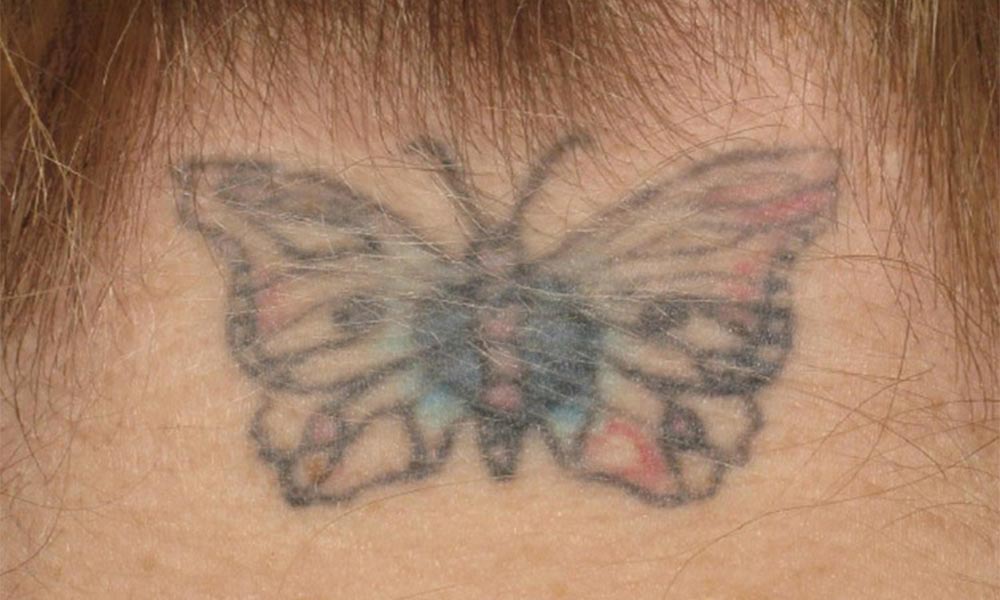
Tattoos are significantly increasing in popularity; but thankfully, these decisions are no longer permanent thanks to laser tattoo removal.
Did you know around 50% of those who get tattooed regret all or part of their tattoo at some point in their life? This then leads to them wanting to completely remove the tattoo or attempting to get the distinct appearance of the tattoo faded, allowing for the area to be re-tattooed with a new design.
Here at the Cosmetic Refinement Clinic, we approach the removal of unwanted tattoos using two methods. The most common method utilises the gold standard of laser technologies available for tattoo removal, the Q-switched Laser. Q-switched laser technology is scientifically and medically proven as the gold standard in tattoo removal, especially for black, blue, dark blue, red and green pigments.
However, as laser technology advances within its treatment capabilities, medical researchers have discovered incorporating a fractionated laser alongside the Q-switched laser further enhances the overall outcome in tattoo removal.
Does Laser Tattoo Removal Hurt?
There can be mild to moderate discomfort experienced whilst undergoing the treatment. The severity of discomfort felt is usually dependent on what method is used for treatment. However, to minimise the amount of discomfort felt by the client with either treatment method, a topical anaesthetic cream is always applied (usually by the client) 45 minutes prior to their scheduled appointment. Ice packs and the use of a cooling device that blows refrigerated air onto the skin is incorporated during the procedure to further assist in minimising your discomfort.
In some cases, once the procedure is finished, a mild throbbing, and heat sensation can be felt, which usually lasts only a few hours.
What Will The Area Look Like Post-Treatment?
What you will see post treatment usually depends on the type of method used to remove the tattoo. Where Q-switch laser is only used, the area may appear mildly swollen with some surrounding redness. After a few days the treated area may develop some mild crusting. It is important to avoid picking these scabs as it may result in unwanted scarring. Overall, the area will usually take around one to three weeks to completely heal.
In procedures where the fractionated laser is incorporated into the treatment you may experience pinpoint bleeding in the area due to the removal of columns of tissue. These will eventually turn into crusts/scabs as the skin begins to heal. The degree of swelling and redness can increase as a result of combining the two lasers to increase treatment efficacy.
Following each treatment, specific home-care requirements are prescribed to minimise the duration of post-treatment down time.
How Is A Tattoo Removed By Laser?
The Q-switched laser technology emits specific wavelengths of light at fast speeds that are highly attracted to the tattoo pigment that is seen on the surface of the skin. This causes the tattoo pigment to fragment into smaller particles, which are then eliminated via the body’s natural processes. All of this is done whilst minimally affecting the skin surrounding the tattoo.
In cases where the fractionated laser device is incorporated, this is performed prior to the Q-switched laser. The fractionated laser is able to eliminate columns of unwanted ink pigment from the skin as well as aiding in providing a deeper and more effective absorption from the Q-Switch laser.
How Many Laser Treatments Are Needed To Remove A Tattoo?
The number of treatments required usually depends on many factors. These include; the tattoo itself, its location on the body, how old the tattoo is, the colouring used in the tattoo, the amount of ink and its layers, the individual’s skin type and overall health all impact the number of treatments required.
Furthermore, incorporating the fractionated laser prior to treating the tattoo with the Q-switch laser results in fewer treatments being required due to its aggressive nature. However, in saying that, it is difficult to completely 100% remove a tattoo. On average, anywhere from 10-12 treatments is usually required.
The intervals between each treatment are approximately every six to eight weeks however can be up to 10 weeks when incorporating the fractionated laser.
Book Your Initial Consultation for a Tattoo Removal Plan
Prior to commencing treatment a consultation with one of our dermal clinicians is required to determine the optimal treatment plan, including costing per treatment.
Tattoo removal consultations cost $50.00 and approximately go for 45 minutes to an hour.

Book an appointment with Hayley today!
All consultations cost $55.00 and are performed by our experienced dermal clinicians.
Treatments For Laser Tattoo Removal

Laser Tattoo Removal
Related Products
related
Refine Insights
Dr Libby Discusses Bio-remodelling injections
Transcript: Bio-remodelling treatments are relatively new to Australia, but they've been used overseas for around six or seven years and they're an increasingly popular treatment. Now we aren't allowed to use the brand name when discussing this product because...
A Comprehensive Guide to Ultherapy
Ultherapy using HIFU (High-Intensity Focused Ultrasound) is an effective non-surgical facelift treatment that lifts and tightens the skin on the face, neck and decolletage. This treatment is gaining popularity because it offers a non-invasive alternative to surgical facelifts and produces stunning, natural-looking results.
A Guide to RXR Cosmetic Injectables
At Cosmetic Refinement Clinic, we offer a range of treatments to help you achieve your skin goals, and RXR cosmetic injecting is our Gold Standard for improving skin quality and hydration.
latest
Specials
The clinic runs different skin treatment and/or skincare specials and promotions throughout the entire year.
These promotions are usually updated at the start of each new season; summer, winter, autumn, spring.
save with our
Packages
Many of our skin treatments and skincare programs require multiple appointments to achieve the transformational and long lasting results you are looking for.
Pre-booking our packages allows you to save on cost and lock in your sessions.